Social SEO used to sound like a contradiction. Social media was treated as fast, noisy, and temporary, while SEO was treated as slow, technical, and blog-centered. That separation no longer holds. In 2026, creators are discovered through search-like behavior across YouTube, TikTok, Instagram, and Google, often in the same user journey.
HubSpot’s 2026 marketing data shows that updating SEO for search changes is one of the top priorities for marketers this year. At the same time, TikTok says users are moving through curiosity-driven discovery paths, and YouTube continues to deepen discovery across Shorts, long-form, podcasts, and image posts. Search is no longer only about ranking blue links. It is about showing up wherever intent becomes visible.
For creators, this is good news. It means discoverability is not limited to classic blog SEO. If you package topics clearly, use strong language patterns, and connect formats intelligently, your content can surface across multiple search and recommendation contexts.
What social SEO actually means
Social SEO is the practice of making content easier to discover through search behaviors inside social platforms and adjacent search surfaces. This includes the words you use in titles, captions, descriptions, on-screen text, spoken language, image metadata, and surrounding context.
It is not just keyword placement. It is search intent alignment. A creator who understands the exact language their audience uses can package content in a way that helps platforms and people understand what the content is about and when it is relevant.
This applies to videos, posts, carousels, shorts, thumbnails, and images. Google’s image SEO documentation reinforces the same principle for web content: descriptive filenames, relevant titles, nearby contextual text, and strong alt text all help search systems understand images better.
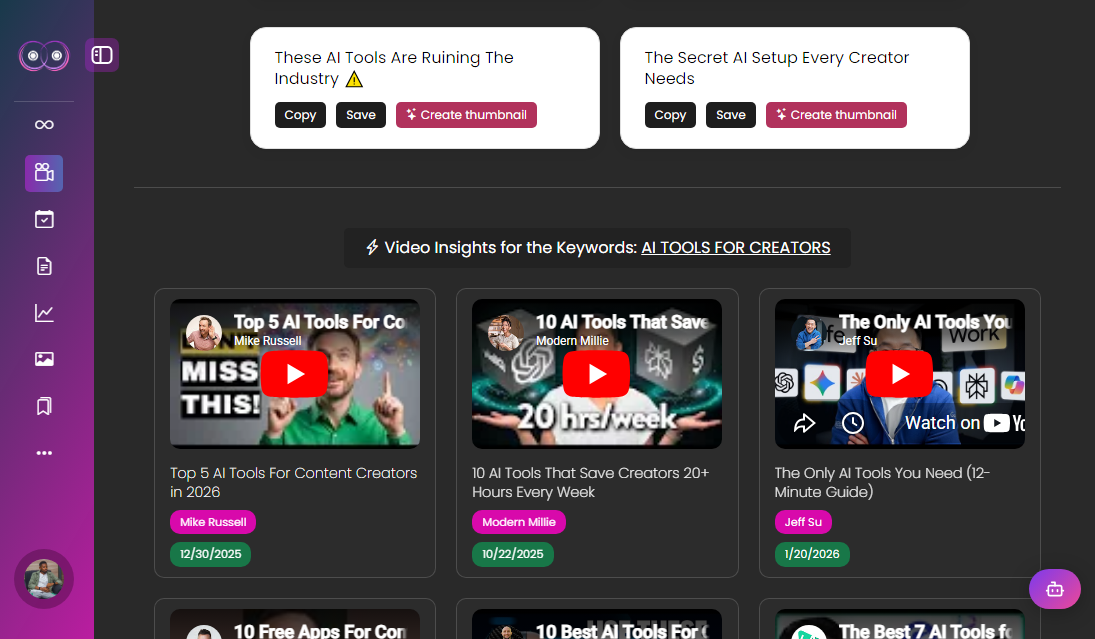
How discoverability differs by platform
YouTube discoverability leans heavily on titles, thumbnails, descriptions, watch behavior, and topical consistency. TikTok discoverability is more fluid and often combines captions, comments, sounds, spoken language, and behavior around niche communities. Instagram and Threads are increasingly shaped by descriptive captions, keywords, profile clarity, and the way topics are framed visually.
The important principle is that each platform still rewards clear topic packaging. If your content is vague, cryptic, or overly branded without being descriptive, you reduce both searchability and recommendation clarity.
The five building blocks of social SEO
First, use audience language. The best keywords often come directly from comments, search suggestions, and recurring pain points, not from formal SEO tools alone.
Second, lead with clarity. Put the core topic near the beginning of titles, captions, and descriptions where possible. This helps both human scanning and system interpretation.
Third, support the package visually. Google recommends descriptive filenames and useful alt text for images, and the same principle is useful across creator assets more broadly. A screenshot, thumbnail, or carousel should reinforce the topic instead of being visually detached from it.
Fourth, connect related assets. Internal linking on your website, consistent phrasing across content clusters, and platform-specific sequel posts all reinforce topical authority.
Fifth, publish in a way that reflects intent, not just output volume. Search-friendly content usually solves a problem, answers a question, or compares options clearly.
- Use the exact problem phrase your audience already uses
- Put important terms near the front of the title
- Match the image, thumbnail, and caption to the same topic
- Link related posts, features, or guides together
- Refresh winning topics with new examples and updated framing
Why image SEO now matters for creator brands
Creators often ignore image SEO because they think only blog posts need it. That is a mistake. Google explicitly says descriptive filenames, titles, and alt text help search systems understand image subject matter. If you publish guides, product pages, screenshots, or infographics, the image layer becomes part of your discoverability footprint.
This is one reason I generated descriptive hero images for these Harmonif posts and attached descriptive alt text to them in WordPress. The same logic applies to feature screenshots and social graphics. Images should not be named image-1.png if they can be named ai-content-planning-creators-2026.png. Small details compound.
Use Harmonif to align search and social execution
Harmonif is well positioned for social SEO because the workflow spans trend discovery, content planning, title generation, script writing, and posting. Discoverability improves when those steps talk to each other. A trending topic should influence your title choices. Your title choices should influence your script angle. Your script angle should influence your caption, description, and follow-up posts.
When each stage is handled in a disconnected tool, search intent often gets diluted. A connected workflow helps you keep the same audience language from idea through publish.
The social SEO mindset shift
The old mindset asked, “How do I rank this?” The better 2026 mindset asks, “How do I make this easy to find, easy to understand, and worth returning to?” That is the job across Google, YouTube, TikTok, and the rest.
Search is no longer a separate department of the internet. It is built into how audiences explore almost every platform. Creators who package clearly and publish consistently have a real advantage.
Common mistakes to avoid
The first mistake is treating social seo for creators in 2026: how to get found on youtube, tiktok, and google like a one-time tactic instead of a repeatable system. Most creators get temporary results when they test a better workflow once, but they fail to turn that workflow into a habit with clear steps, deadlines, and review points.
The second mistake is optimizing for output volume before clarity. More posts, more clips, or more titles do not help if the topic fit is weak, the package is vague, or the audience payoff is unclear. Strong creator workflows usually get simpler as they improve, not noisier.
The third mistake is skipping the review loop. A creator who never checks what actually performed, what felt easy to produce, and what should be turned into a repeatable format keeps starting over. The whole point of a system is to learn faster with each publishing cycle.
What to measure after publishing
Do not judge the success of a content workflow by vanity metrics alone. The better question is whether the content attracted the right audience and created a useful next step. For some posts that means watch time and retention. For others it means saves, replies, profile visits, click-throughs, or movement toward a product or newsletter action.
You should also measure production efficiency. If a topic performs well but takes an unsustainable amount of time to create, it may need a lighter format or a better workflow. The best systems improve both content quality and execution speed over time.
- Discovery metrics: impressions, reach, search visibility, and click-through rate
- Engagement metrics: watch time, saves, comments, replies, and meaningful shares
- Conversion metrics: email signups, app clicks, feature-page visits, and product actions
- Operational metrics: time to publish, number of revisions, and backlog completion rate
Frequently asked questions
What is social SEO?
Social SEO is the practice of optimizing content so it is easier to discover through search-like behavior on platforms such as YouTube, TikTok, Instagram, and Google.
Do keywords still matter on social media?
Yes, but they matter most when they reflect audience intent. Clear topic language in titles, captions, descriptions, and visuals helps both users and platforms understand your content.
Does image alt text help SEO?
Yes. Google says alt text helps it understand the subject matter of images, and it also improves accessibility for users who rely on screen readers.
Referenced platform updates
This article reflects creator-platform guidance and trend signals current as of April 30, 2026.
Put this workflow into practice with Harmonif
Harmonif gives creators a faster path from idea to publish with tools for content planning, trend discovery, title generation, thumbnail ideation, script writing, and posting to socials.
Get started in the app or explore the full features overview.
A simple 7-day implementation plan
If you want to apply the ideas from Social SEO for Creators in 2026: How to Get Found on YouTube, TikTok, and Google immediately, use the next seven days to turn the theory into a repeatable habit. Keep the scope narrow enough that you actually finish it, then improve it after the first cycle.
- Day 1: define the audience, topic, and outcome you want from the content
- Day 2: gather source material, examples, and recent audience questions
- Day 3: generate angles, titles, or outlines and choose the strongest direction
- Day 4: draft the main asset and map supporting content variations
- Day 5: package the asset with stronger visuals, captions, or supporting copy
- Day 6: schedule or publish the content and distribute it across the right surfaces
- Day 7: review what worked, document the lesson, and update next week’s workflow
By the end of the week, you should have more than a finished post. You should have a clearer process you can run again with less friction.
How different creators can apply this
An educational creator can use social seo for creators in 2026: how to get found on youtube, tiktok, and google to turn expertise into a more reliable publishing engine. Instead of relying on inspiration, the creator can map recurring audience questions into clear topic clusters, build stronger weekly assets, and repurpose the best lessons into supporting posts that keep discovery active across formats.
A product-led creator or founder can use the same workflow to bridge marketing and product education. Helpful content can answer objections, demonstrate features, compare approaches, and move people toward the next logical action without every post feeling like a sales pitch. This is especially valuable when the audience needs repeated context before converting.
A service provider or consultant can use the framework to turn client knowledge into a library of trust-building assets. The same process that creates a guide, title, or trend response can also create clips, FAQs, case-study angles, and calls to action that feed discovery while reinforcing authority.
In every case, the principle is the same: the workflow should reduce friction between expertise and publication. When the system works, content quality improves because more attention can go to insight and delivery instead of scattered logistics.
A decision framework for your next publishing cycle
When deciding whether to repeat, expand, or retire a content approach, use a simple framework. First, ask whether the topic attracted the right people. Second, ask whether the format made the idea easy to consume. Third, ask whether the workflow was efficient enough to repeat without draining your team or your own energy.
If the topic fit was strong but the package was weak, improve the title, thumbnail, caption, or opening hook. If the package worked but the audience payoff was weak, strengthen the angle itself. If the content worked but the execution felt too heavy, simplify the production path and keep the idea. This keeps you from abandoning good concepts because the process around them was messy.
Creators who grow steadily tend to review performance this way. They do not just ask whether a post “did numbers.” They ask what part of the system deserves to be repeated and what part needs redesign. That mindset makes every publishing cycle more valuable.
A practical resource checklist
Before your next piece of content goes live, make sure the operational pieces around social seo for creators in 2026: how to get found on youtube, tiktok, and google are actually prepared. Many creators lose momentum because the idea is strong but the surrounding assets are missing or inconsistent.
- A clear target audience and one-sentence content payoff
- At least three title or hook variations
- A visual plan or supporting image that reinforces the topic
- A short CTA connected to the next useful action
- A distribution plan for follow-up clips, social posts, or email reuse
- A review note for what to watch after publishing
This kind of checklist may look basic, but it removes avoidable friction. High-performing systems are rarely built on complexity. They are built on useful defaults repeated consistently.
How to keep the content aligned with your audience
The fastest way to waste a good workflow is to apply it to topics your audience does not actually care about. Before publishing, check whether the idea is tied to a real question, frustration, aspiration, or decision your audience already has. Relevance creates far more growth than empty volume.
One practical approach is to compare your draft against recent comments, DMs, support questions, customer calls, or search terms. If the language in the content feels disconnected from the language your audience uses naturally, refine the framing. Even a strong post will underperform if the audience cannot immediately recognize that it is for them.
This is also where category fit matters. A creator who talks to beginners should package the topic differently from a creator speaking to advanced operators. The workflow may stay the same, but the examples, pacing, and assumptions should match the person you want to help.